
MENU
Towing
Light-Duty TowingMedium-Duty TowingHeavy-Duty TowingRoadside Assistance
Jump StartTire ChangeCar LockoutFuel DeliveryWinch-OutService Areas
WilmingtonHarbor CityLomitaRancho Palos VerdesCompany
AboutBlogContactCar Battery Dead Overnight in San Pedro?
A gray morning by the harbor, you turn the key and hear only a click. Here is why batteries die overnight, what to check first, and when a jump start or a tow makes sense.
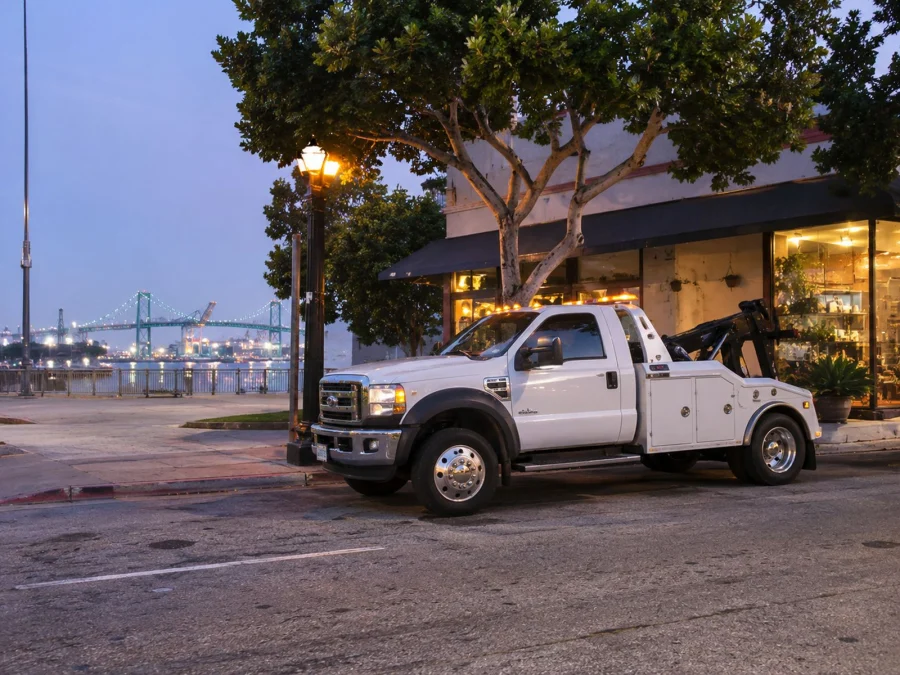
Short answer: A car battery usually dies overnight for one of four reasons: something stayed on, a part kept drawing power with the car off, the battery is old and weak, or the charging system is not refilling it. Try the simple checks below first. If the car still will not start, a jump start from Huddleson Roadside Service often gets you moving. Call (424) 329-6842.
A Gray Morning on Gaffey Street
It is a cool November morning in San Pedro. The marine layer sits low over the harbor, the windshield is wet, and you are already a little late. You turn the key and hear one click, or a fast rattle of clicks, or nothing at all. The dash lights flicker and fade. Yesterday the car ran fine.
This is one of the most common calls we get, from driveways up in the Palos Verdes hills to apartment lots in Wilmington and work yards near the port. The good news: a dead battery is often a quick fix right where the car sits. The trick is knowing what caused it, so you are not back in the same spot tomorrow morning with the same click.
Why a Car Battery Dies Overnight
A battery rarely fails out of nowhere. Something drained it, or it was already weak and one cool night pushed it over the edge. These are the usual suspects:
- Something stayed on. Headlights, a dome light, a glove box light, a trunk that did not fully latch, or a phone charger with a little light of its own.
- A hidden drain. A part keeps pulling power after the car is off. Aftermarket stereos, dash cams wired to the battery, alarms and remote starters are common causes. Mechanics call this a parasitic drain.
- An old battery. As batteries age, they hold less charge. One that barely started the car on a warm afternoon can give up after a cool, damp night.
- A charging problem. If the alternator is not refilling the battery while you drive, the car goes to bed half empty and wakes up dead.
- Lots of short trips. Quick runs to the store and back do not give the alternator enough time to replace what the starter used.
- Loose or crusty terminals. White or green buildup on the battery posts makes it hard for power to flow, even when the battery itself is fine.
Does Cool, Damp Weather Really Matter Here?
We do not get snow at the harbor, but our nights do turn cooler this time of year, and the air off the water is damp and salty. Cooler temperatures slow the chemistry inside a battery, so it has less power to give in the morning, right when a cold engine needs the most help to turn over.
Salt air adds a second problem. It speeds up corrosion on the battery terminals and cable ends. If your car spends its nights near the water, along Harbor Boulevard or close to Point Fermin and Cabrillo Beach, it is worth opening the hood now and then to look for crust on the posts.
None of this means a healthy battery will suddenly quit. It means a weak battery finds out it is weak on the first chilly morning. Think of it as the battery handing in its resignation letter, just on the day you have an early meeting.
What to Check Before You Call
Try these simple checks first. They take a few minutes and sometimes solve the problem without anyone coming out.
- Look at the lights. Turn on the headlights. Bright lights point away from the battery. Dim lights, or none at all, point right at it.
- Listen to the sound. Rapid clicking usually means a low battery. A single click with bright lights can mean a starter or cable problem instead.
- Check the shifter. Many automatic cars will not start unless they are fully in Park. Move the shifter to Neutral and back to Park, then try again.
- Check the key fob. With push-button start, a weak fob battery can stop the car from starting. Your owner’s manual shows where to hold the fob so the car can still read it.
- Look at the terminals. If you see heavy crust, do not scrape at it with bare hands. Battery acid can burn skin and eyes.
- Give the starter a rest. Cranking over and over can overheat the starter. Wait a bit between tries.
If the lights are dim and you hear clicking, it is almost always the battery. That is when a jump start makes sense. This quick table can help you read the signs:
| What you notice | What it usually means | What helps |
|---|---|---|
| Rapid clicking, dim dash lights | Low or dead battery | A jump start |
| One loud click, bright headlights | Possible starter or cable problem | Check the terminals, then call |
| Engine cranks slowly, then starts | Weak or aging battery | Have the battery tested soon |
| Starts after a jump, dead again next morning | Battery not holding a charge, or a hidden drain | Battery test, then a shop if needed |
| Battery light on while driving | Charging system problem | Get to a shop, or call for a tow |
| No lights, no sound at all | Fully dead battery or a loose cable | A jump start or a tow |
When a Jump Start Works, and When It Will Not
A jump start gives your battery enough power to crank the engine. Once the engine runs, the alternator takes over and starts recharging. For a battery that was drained by a light left on, that is often all you need.
A jump start will not fix everything. If the battery is very old, cracked, swollen or leaking, it should be replaced, not jumped. If the car starts but dies again right away, or the battery light stays on while you drive, the charging system may be the real problem. In that case, light-duty towing to your mechanic is a safer choice than getting stuck again on the Harbor Freeway.
After a jump, drive for a good while, not just around the block, so the battery can recharge. Then have it tested by your mechanic or an auto parts store. A test tells you whether the battery is worn out or something else drained it.
Jumping It Yourself: Stay Safe
If you have cables and a helper with a running car, you can jump the car yourself. Follow your owner’s manual first, since some newer cars have special jump points under the hood instead of using the battery posts.
- Park the cars close, but not touching, and turn both of them off.
- Connect red to the dead battery’s positive post, then red to the good battery’s positive post.
- Connect black to the good battery’s negative post, then black to a bare metal spot on the dead car’s engine, away from the battery.
- Start the good car, let it run a few minutes, then try the dead one.
- Remove the cables in the reverse order.
If the battery is cracked, leaking or smells like rotten eggs, stop. Do not jump it. Call us instead and we will tell you what makes sense.
If It Dies While You Are Driving
A battery that quits on the road is a different situation, and it usually points to the charging system. If the battery light comes on and the car loses power on the Harbor Freeway (I-110), the Vincent Thomas Bridge or I-405, get as far right as you safely can and turn on your hazard lights. If it is safe, stay in the car with your seat belt on. The California Highway Patrol has more freeway safety advice. Then call (424) 329-6842 and tell us your direction and the nearest exit.
In Wilmington and Around San Pedro
We take dead battery calls all over our home area: apartment parking lots in Wilmington, driveways in Harbor City and Lomita, steep streets in Rancho Palos Verdes, and work lots near the Port of Los Angeles and Terminal Island. We also cover Torrance, Carson, Harbor Gateway and Long Beach.
When you call, give us the cross street or the name of the parking lot, like Gaffey Street and 9th Street, Western Avenue near Pacific Coast Highway, or Avalon Boulevard in Wilmington. The clearer the spot, the easier it is to find you, especially on a foggy morning.
Bigger vehicles get dead batteries too. We help vans, box trucks and motorhomes, and when one cannot be started where it sits, medium-duty towing takes it to the shop. For semi trucks and buses, there is heavy-duty towing.
How to Keep It From Happening Again
- Do a quick walk-around before you lock up: lights off, doors and trunk fully shut.
- Unplug chargers and dash cams that stay powered when the car is off.
- If you mostly make short trips, take a longer drive once a week.
- Check the terminals for crust every few months, especially if you park near the water.
- Have the battery tested before the cooler months, and replace it if it tests weak.
- Recycle the old battery the right way. Stores that sell car batteries usually take the old one back, and the LA County household hazardous waste program lists other drop-off options.
When to Call Huddleson Roadside Service
Call us when the car will not start after the simple checks, when you do not have cables or a second car, or when you would rather not stand in a dark parking lot holding jumper cables. If the keys ended up locked inside while you were sorting it out, our car lockout service can help with that too.
We are available day and night. Call (424) 329-6842, tell us where you are and what you drive, and you get a clear quote before we start.
Dead Battery Questions
Why did my car battery die overnight?
Usually something stayed on, a part kept drawing power with the car off, the battery was old, or the alternator was not charging it. A jump start gets you going, and a battery test tells you which one it was.
Can cool weather kill a car battery overnight?
Cool nights do not ruin a healthy battery, but they lower the power it can give. A weak battery often fails on the first cool, damp morning, which is common in San Pedro in late fall.
My car will not start even after a jump. What now?
The battery may be too far gone, or the problem may be the starter, a cable or the charging system. We can take the car to your mechanic with light-duty towing.
Do you jump start vans and trucks too?
Yes. Our jump start service covers cars, SUVs, pickups, vans and trucks in San Pedro and nearby.
How do I reach Huddleson Roadside Service?
Call (424) 329-6842. We are available day and night. Tell us where you are and what you drive.
Dead Battery in San Pedro?
(424) 329-6842Calling is the quickest way to reach us. For anything that can wait, send the form and we will call you back with a quote.